
The quarter-wave ground plane antenna is the de facto standard for local VHF and UHF base stations. It is exceptionally easy to build, offers omnidirectional radiation and, when its radials are properly angled, presents a near perfect 50-ohm impedance directly to the coaxial cable.
How it works
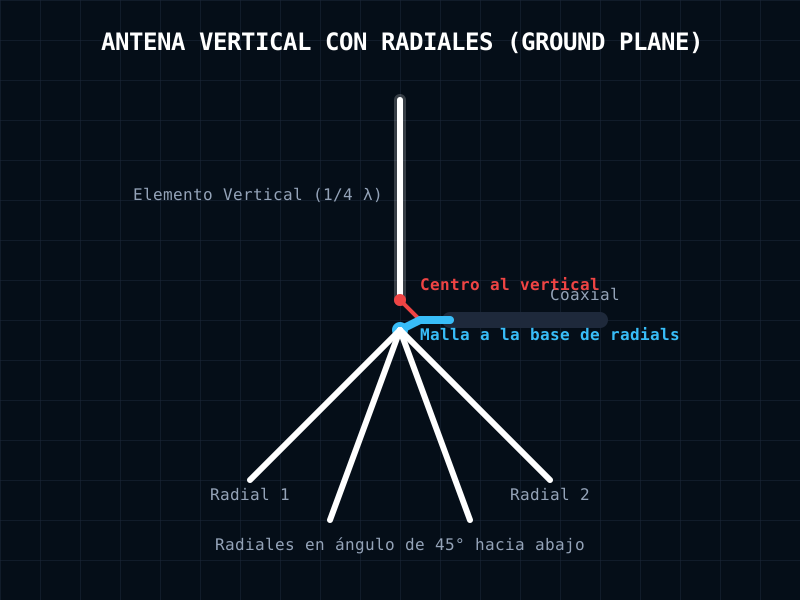
- The central (radiating) element is vertical and measures one quarter wavelength (1/4 λ).
- The artificial “ground” is created by 3 or 4 rods (radials) attached to the coax shield at the base.
- If the radials are horizontal (90°), the impedance is about 36 ohms. By angling them downward about 45 degrees, the impedance rises to 50 ohms.
Tactical Ground Plane Calculator
Enter the operating frequency to get the element measurements. (Assumes the use of rigid metal rods or thick self-supporting wire).
⛺ Emergency Deployment Guide (For Non-Techs)
- Setup and Radial Angle: The main radiator goes straight up into the sky. The 4 radials hanging from the base MUST NOT be horizontal; give them a downward tilt of 45 degrees. That tilt is the “magic trick” so the radio sees the antenna as a perfect 50-ohm match.
- Recommended Height: Being an artificial “ground plane”, the antenna can be elevated on the roof of a house or a 10-15 foot mast without issue.
- Isolators: The vertical radiator (the tip pointing up) must not touch the metal mount or the radials. It must be completely isolated.
- Feed Line (Coaxial): If you use the 45-degree angle on the radials, you can safely connect a 50-ohm cable (RG-58). If you only have 75-ohm TV cable (RG-6), you can try leaving the radials completely horizontal to improve the match with that specific cable.
Document prepared and approved by:
Pablo Rocchetta HP1PAR / LU2ECV
Revision V1.0
Do you have suggestions or corrections? Visit the Suggestions Box.
Pablo Rocchetta HP1PAR / LU2ECV
Revision V1.0
Do you have suggestions or corrections? Visit the Suggestions Box.