
1. Demystifying Food Storage: Family Insurance vs. Doomsday Hysteria
An unfounded stigma associates food storage with apocalyptic scenarios or compulsive hoarding. This misconception ignores modern economic realities:
Supermarkets are not storage warehouses; they operate on Just-in-Time logistics. Shelves hold only 48 to 72 hours of normal city consumption.
Minor rumors or alerts trigger artificial demand spikes. Shelves empty due to the speed of fear-driven buying, not national food shortages.
During civil unrest or security risks, merchants shutter storefronts. Even if stockrooms hold goods, public access is locked.
A structured pantry is not about doomsday; it is about common sense: it serves as a shock absorber (buffer) that prevents having to compete for essentials on chaotic streets during a crisis.
2. The Logistics Recovery Dynamics
Industrial and commercial supply chains operate like continuous manufacturing plants: shutting down takes minutes; restarting logistics takes days or weeks.
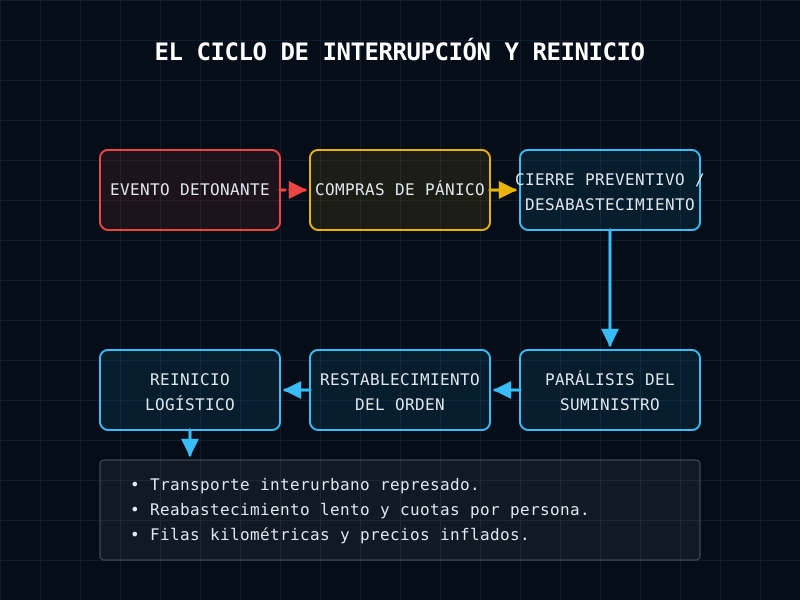
Maintaining home reserves allows a family to calmly wait out the recovery cycle while systems stabilize prices and shipping lanes, avoiding exposure to volatile crowds.
3. Empirical Evidence: Real Supply Chain Disruptions
• The Event: Within 48 hours of initial health warnings, panic buying cleared supermarket shelves across major nations.
• Lesson: Unprepared households stood in volatile lines for hours, while families with basic reserves stayed home safe.
• The Event: Pan-American Highway blockades severed agricultural and fuel shipments for weeks.
• Lesson: Cities suffered fresh food shortages and provinces ran dry on fuel; households with dry legumes, grains, and canned staples ate normally.
• The Event: A 10-day transport stoppage paralyzed freight across Brazil's metropolitan regions.
• Lesson: Perishables vanished in 72 hours and full supply chain restabilization took over two weeks after the strike ended.
4. The Active Pantry Method: “Eat What You Store, Store What You Eat”
A common novice mistake is buying foreign emergency ration kits or dehydrated meals that family members never eat. This causes needless expense and digestive or psychological friction during stress.
The professional standard relies on a Rotating Active Pantry (FIFO: First In, First Out):
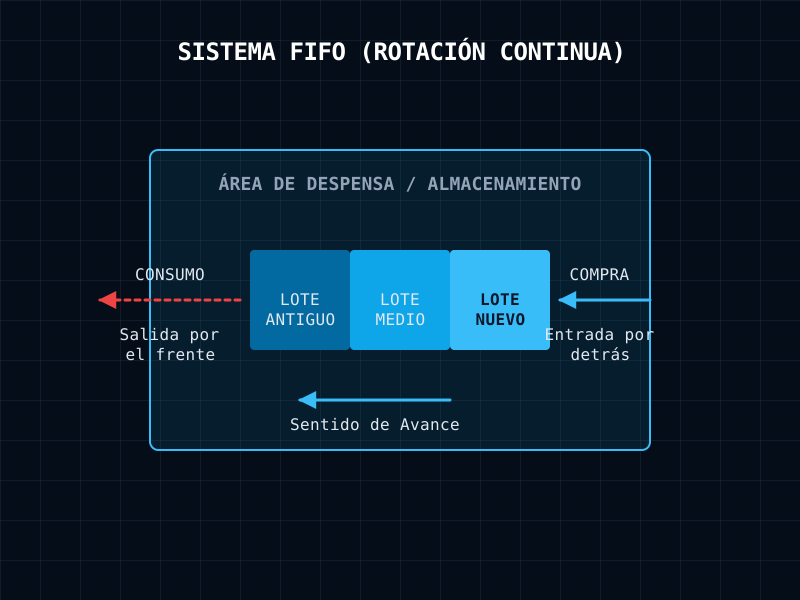
Store staples the household routinely cooks (rice, beans, pasta, canned fish, oats, coffee, oil, spices).
Reserves rotate naturally through weekly cooking. New purchases replenish the back of the pantry.
Comfort items (chocolate, honey, tea, cookies) reduce stress hormones and stabilize family morale.
5. Key Family Planning Audit Questions
Audit your home pantry with three straightforward questions:
| AUDIT QUESTION | OPERATIONAL ASSESSMENT | ACTION ITEM |
|---|---|---|
| 1. "If stores close for 7 to 14 days, how do we eat?" | Are we reliant on delivery, daily groceries, or freezers? (Freezers thaw in 24–48 h without power). | Increase non-perishable dry and canned goods requiring no refrigeration. |
| 2. "How do we cook without grid power or piped gas?" | Raw grains (rice, beans) require heat and potable water. | Secure a portable butane/propane camp stove and dedicated hydration water. |
| 3. "What basic cooking essentials are missing?" | Grains without salt, oil, or seasonings become unpalatable. | Add sea salt, cooking oil, sugar, spices, and multivitamins to gradual purchasing. |
6. Gradual Implementation Schedule (Rule of +1)
Building reserves requires no sudden large budget. Follow the sustainable +1 rule:
GRADUAL RESERVE IMPLEMENTATION SCHEDULE (RULE OF +1)
- On each weekly shopping trip, add 1 or 2 extra units of routine non-perishables (e.g., +2 kg rice, +2 cans tuna, +1 pack lentils).
- Add 1 extra 5-gallon (19 L) potable water container.
- Incorporate fats and seasonings (cooking oil, sea salt, coffee, sugar/honey).
- Add ready-to-eat comfort goods (canned fruit, nuts, crackers).
- Consolidate airtight pest-proof storage (food-grade buckets or Mylar bags with oxygen absorbers).
- Confirm backup cooking capability (portable single-burner camp stove + 4 gas canisters).
7. Conclusion: The Peace of Autonomy
Maintaining a stocked pantry is an act of domestic responsibility, financial prudence, and peace of mind.
It ensures that a temporary logistics breakdown, severe weather event, or civil stoppage shifts from an acute family crisis into a manageable minor inconvenience handled from the safety of home.